Bedding · Materials & Care
How to Choose a Wool Comforter for Year-Round Comfort
A wool comforter can feel airy in one room and wonderfully enveloping in another. Fill weight, construction, cover fabric, and care all shape the experience. Understanding those details helps you choose a layer that suits your climate, your sleeping preferences, and the way you like to maintain your bed.
Why consider wool bedding?
Wool brings a distinctive balance of insulation and moisture management to bedding. Its fibers can hold still air, helping a comforter retain warmth, while also absorbing and releasing moisture. For some sleepers, that combination feels less clammy than bedding that traps heat and humidity close to the body. The result is not a promise that every wool comforter will feel cool or warm in exactly the same way; the comfort you notice depends on fill quantity, the shell, room temperature, sleepwear, and personal preference.
Wool is also resilient and naturally crimped, characteristics that help create loft and a soft, gently buoyant feel. Unlike a comforter that relies on a lofty down cluster, wool batting is generally held in place by quilting or another form of compartmentalized construction. These differences matter when you compare how a comforter drapes, how its warmth is distributed, and what maintenance it requires.
“Year-round” is best understood as a practical goal rather than a guarantee. A lightweight wool comforter may suit a warm bedroom, a hot sleeper, or a household that layers bedding through the seasons. A heavier fill may be more appealing in a chilly room or during winter. In especially warm weather, even a light comforter may feel too substantial; a sheet or a light blanket can be the more comfortable choice.
Start with fill weight—not just the word “light”
Fill weight describes how much insulating material is used in a comforter, usually expressed as a total weight or as an amount per area. It is one of the most useful details to compare because it gives you more information than a label such as “all-season.” However, figures are meaningful only when you know what is being measured. A total fill weight can vary with the size of the comforter, while a per-square-yard figure makes comparison across sizes more useful.
A lighter fill typically provides less insulation and may suit warmer conditions or sleepers who tend to overheat. A heavier fill generally creates more warmth, although the outer fabric, quilting, and overall dimensions also affect how it feels. There is no universal fill-weight threshold that neatly divides summer from winter bedding. Consider your bedroom’s typical temperature and whether you prefer a light layer or the enclosed feeling of a more substantial comforter.
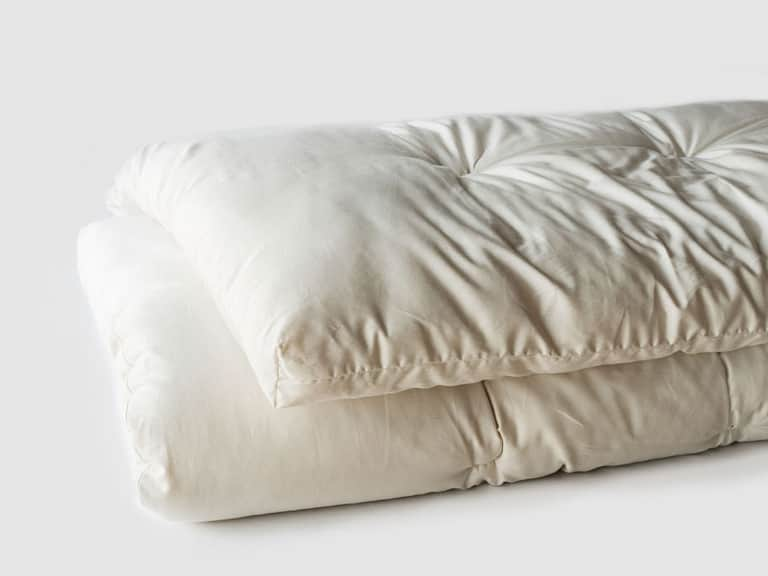
Some wool comforters are available in distinct weights, giving you a choice between a lighter option and a fuller year-round or colder-season layer. Sleep & Beyond’s myMerino lightweight wool comforter, for example, is described as a lighter version intended for three-season use. Its listed fill weight is 6 ounces per square yard. That specification can help set expectations, but it should be considered alongside the comforter’s size, shell fabric, room conditions, and your own experience of warmth.
For comparison, Sleep & Beyond’s myComforter is listed with 13 ounces of fill per square yard. These two figures illustrate why reading the specifications matters: options from the same brand may be designed for different warmth preferences. Confirm current product information and sizing before making a decision, since specifications and available configurations can change.
If you are between warmth levels, think about how you already dress your bed. A lighter comforter under a duvet cover, paired with an additional blanket during cold spells, offers flexibility. Someone who prefers one substantial layer may lean toward a fuller fill instead. Your usual routine is often a better guide than a broad seasonal label.
Look closely at construction and quilting
The way wool is distributed inside a comforter influences its shape and performance. Quilted channels or stitched compartments are intended to limit the movement of the fill and help keep it spread through the bedding. Without effective stabilization, batting can bunch or migrate, leaving some areas less insulated than others. Ask how the filling is secured and whether the construction is designed to maintain an even layer with regular use.
Construction can also affect drape. Closely quilted sections may give a comforter a more defined, structured hand, while other designs can feel softer and more pliable. Neither quality is inherently better. A tailored, consistent surface may appeal to someone who likes a neat bed; a supple drape may feel more relaxed. Look for clear information about quilting and inspect the care guidance, which may indicate how the maker expects the fill and stitching to be protected over time.
Size deserves attention too. A comforter should cover the mattress adequately and provide enough drop on the sides for your bed and preferred styling. Oversized bedding may feel more enveloping, but it also adds weight and can be harder to launder or store. Check finished dimensions rather than relying only on a size name, which can vary between makers.
Choose the cover fabric with the same care as the fill
The shell is the fabric enclosing the wool, and it is in close contact with the rest of your bedding. Its fiber, weave, and finish can affect softness, airflow, noise, and durability. Organic cotton is a common choice for wool comforters. A cotton shell can provide a familiar, breathable feel, while the weave and thread construction influence how smooth, crisp, or substantial it seems.
Sleep & Beyond’s myMerino lightweight comforter is described with a GOTS- and OEKO-TEX 100-certified organic cotton sateen shell. The listed specification is 400-thread-count cotton sateen. In another wool-comforter design, the brand describes the myComforter as encased in 270-thread-count cotton sateen. These examples are useful reminders to compare the actual shell details rather than assuming all wool bedding uses the same fabric or finish.
Certification names should be read as information about defined standards, not as shorthand for every possible quality claim. GOTS addresses organic textile processing and related criteria across a supply chain, while OEKO-TEX Standard 100 focuses on testing textile products for certain harmful substances. The exact scope depends on the standard and the certified product. If certification is important to you, check the label, the certification documentation, and which components it covers.
Also consider whether the shell’s feel suits your existing sheets and duvet cover. A comforter placed inside a cover will have a different direct-to-skin role than one used uncovered. If you are sensitive to texture or sound, the tactile and audible qualities of the fabric may matter as much as the fiber name. When specifications leave questions, request clarification from the manufacturer instead of inferring details from marketing language.
Care instructions are part of the purchase decision
Wool comforters are not all maintained in the same way. Some can be washed under specific conditions; others are not intended for routine machine washing. Before choosing, read the care label for instructions on spot cleaning, laundering, drying, and professional cleaning. A “natural” fill does not mean a comforter can be treated like a cotton blanket, and an assumed washing method can damage the wool, shell, quilting, or shape.
For the myComforter, Sleep & Beyond advises against frequent washing because the batting may separate inside the quilted pockets. The brand recommends airing and sunning the comforter, using a duvet cover for protection, and spot-cleaning the cotton shell when needed. Its listed guidance allows machine washing on a wool or delicate cycle without agitation, using an approved wool detergent, but recommends avoiding spinning and drying carefully. Always check the current care instructions for the specific model you own; do not transfer guidance from one wool comforter to another.
The myMerino lightweight comforter is described with care guidance that includes protecting it with a removable duvet cover, spot-cleaning the cotton cover, and airing the bedding. For major stains, the supplied instructions recommend eco-friendly dry cleaning on a short cycle with limited moisture. Those directions underline an important point: “easy care” is relative. If you need bedding that can be washed frequently in a standard household machine, a wool comforter with more involved care may not match your routine.
A duvet cover is a practical first line of protection. It catches much of the everyday soil and can usually be laundered more easily than the comforter itself. Choose a cover that fits the comforter and secure it according to its design so the bedding sits evenly. Regular airing can refresh a comforter between deeper cleaning, but follow the maker’s advice about sunlight, moisture, and storage.
Match the comforter to your sleep habits
Think beyond the season printed on a label. If you wake feeling too warm, you may prefer a lighter fill, breathable sleepwear, and a bedroom kept at a comfortable temperature. If you are often cold, a heavier wool comforter or an adjustable system of layers may feel more appropriate. Consider whether you share a bed with someone whose warmth preferences differ; separate blankets or a lighter shared comforter with individual layers can make the arrangement more adaptable.
People who like a tidy, tucked-in bed may value a comforter with enough structure to hold its shape. Those who prefer a relaxed, draped look may prioritize softness and flexibility. The weight of the entire comforter matters, too. Wool can offer warmth without the same sensation as some very lofty fills, but the feel varies with fill quantity, dimensions, and construction.
For households with allergies, sensitivities, or specific health concerns, avoid treating general material descriptions as medical assurances. “Hypoallergenic” does not mean a product cannot trigger a reaction, and individual responses vary. Review the fiber and finish details, consider using a washable duvet cover, and consult a qualified health professional if you have a significant allergy or medical concern.
A thoughtful comparison checklist
When comparing wool comforters, place the specifications side by side. The following questions help make a broad search more focused:
- What is the fill weight? Look for a number and its unit, and check whether it refers to total fill or fill per area.
- What warmth preference does it suit? Treat seasonal labels as guidance, then relate them to your room temperature and personal comfort.
- How is the wool held in place? Quilting and compartment details can affect distribution, feel, and long-term shape.
- What is the shell made from? Compare fiber, weave, and finish, not just the phrase “natural fabric.”
- What does any certification cover? Verify the certified product and the standard’s scope rather than assuming every component is included.
- How should it be cleaned? Confirm whether it is washable, spot-clean only, or requires specialist cleaning.
- Will you use a duvet cover? This can reduce direct exposure to everyday soil and may extend the time between cleanings.
- Do the dimensions fit your bed? Compare actual measurements with your mattress and preferred side drop.
- How will it be stored? Follow the maker’s directions and keep wool bedding clean and dry when it is not in use.
It is worth checking more than one source when product descriptions are incomplete. A manufacturer’s care label and detailed specification sheet are more useful than a short promotional summary. If fill weight or cleaning guidance is missing, ask before purchase. Clear answers can help you understand both the comforter’s intended use and the care it will require.
Wool, organic claims, and responsible choices
Wool is an animal fiber, and its environmental and ethical profile depends on how it is raised, processed, and transported. Organic certification, where applicable, relates to criteria defined by the relevant standard; it should not be assumed from the word “wool” alone. Likewise, claims such as traceable, regenerative, or responsibly sourced need context. Look for a named program, a clear explanation of what it verifies, and evidence that relates to the specific material in the product.
Durability is another part of a more considered bedding choice. A comforter that suits your climate and can be cared for properly may remain in use for many seasons. Using a cover, following washing instructions, and storing bedding carefully can help protect the shell and fill. Sustainability is not only about the material label; it also involves how well an item fits your life and how long you can use it.
For readers exploring the wider landscape of wool bedding, a certified organic quilted topper can offer a different route to adding wool to the bed. A topper sits over the mattress rather than replacing a comforter, so its function and care requirements are distinct. It should not be treated as a substitute when comparing comforter fill weights, but it may be relevant if you are considering the feel of wool as one layer within a bedding system.
The best wool comforter is the one that fits your routine
Choosing a wool comforter is ultimately an exercise in matching specifications to daily life. Fill weight offers a useful starting point: lighter fills can suit warmer conditions and lighter sleepers, while heavier fills tend to provide more insulation. Construction determines how the wool is distributed, the shell influences the hand and airflow, and care instructions reveal whether the comforter fits your laundering habits.
Sleep & Beyond’s lightweight myMerino and fuller myComforter demonstrate how fill weight and care can differ even within one maker’s range. Compare their stated specifications with other options, and read the instructions for the exact model rather than assuming wool bedding is uniform. A breathable cover, appropriately chosen warmth, and realistic maintenance expectations can make the bed feel composed through changing weather—without asking one comforter to behave identically in every home, season, or sleeper’s hands.